
The Earth’s atmosphere is predominantly comprised of nitrogen (78%), oxygen (21%), and argon (1%). The 4th most common gas in the atmosphere is carbon dioxide at 0.0425%. Although carbon dioxide constitutes a small percentage of the atmosphere, it is essential to life on Earth and is an integral part of Earth processes includes climate and carbon cycles.
Atmospheric carbon dioxide is of particular interest due to its effect on the global climate. Carbon dioxide is a greenhouse gas, meaning that it interacts with the atmosphere to trap heat, much the way greenhouses trap heat and keep the interior warmer than the outside air. When sunlight penetrates the atmosphere, carbon dioxide and other greenhouse gases trap the heat and dissipate it to other air molecules, warming the atmosphere and the earth. The more carbon dioxide in the atmosphere, the more heat that is captured. Over time, the climate warms. A warming climate has numerous consequences, many of which are undesirable.
Long-term monitoring shows the proportion of atmospheric carbon dioxide is increasing, mostly due to burning fossil fuels. Once carbon dioxide is emitted into the atmosphere, it can remain there for centuries and continue to affect the climate.
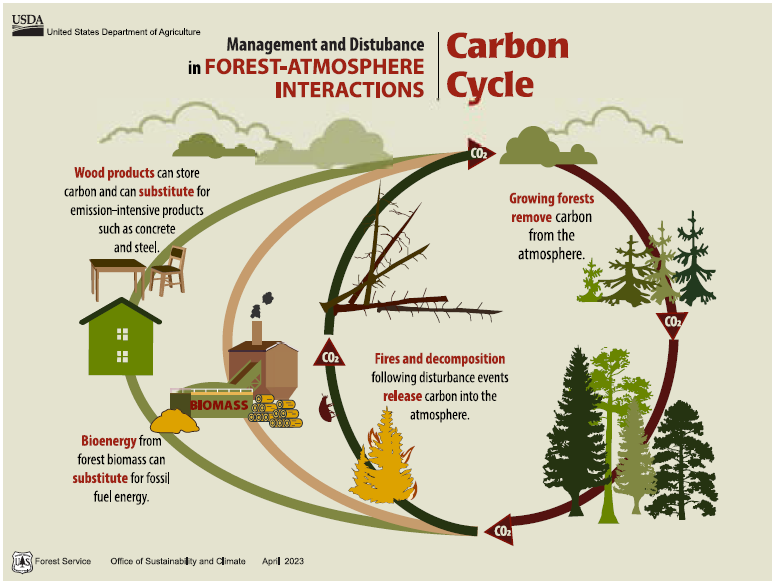
All life forms are based on carbon, and they use carbon to build essential parts of their cellular structure. Trees and other plants are unique because they take up carbon dioxide while they are growing and turn them into wood and other tree tissues. Thus, as a tree grows it draws more carbon dioxide from the atmosphere and stores the carbon in wood.
Since trees are long-lived, they can sequester and store large quantities of carbon in wood. Wood products and forest distrubances are essential parts of the carbon cycle (see image). Dead trees become sources of carbon dioxide as they release it through decomposition.
Atmospheric changes in carbon dioxide are a global issue. It doesn’t much matter where greenhouse gases enter the atmosphere, as once emitted they will gradually get mixed into the global atmosphere and affect the climate. Global climate trends can affect the climate in Missouri and everywhere else. However, we have the capacity to take actions to reduce the rate that greenhouse gases are emitted into the atmosphere. Moreover, through thoughtful forest management we can increase the capacity of forests to pull carbon dioxide from the atmosphere and store the carbon in trees, soils, and durable wood products.